What is LDES and the long-duration energy storage solutions we need now
Primary: long-duration energy storage
Secondary: long-duration energy storage technologies, LDES technologies
LSI: flow battery technology, battery technologies

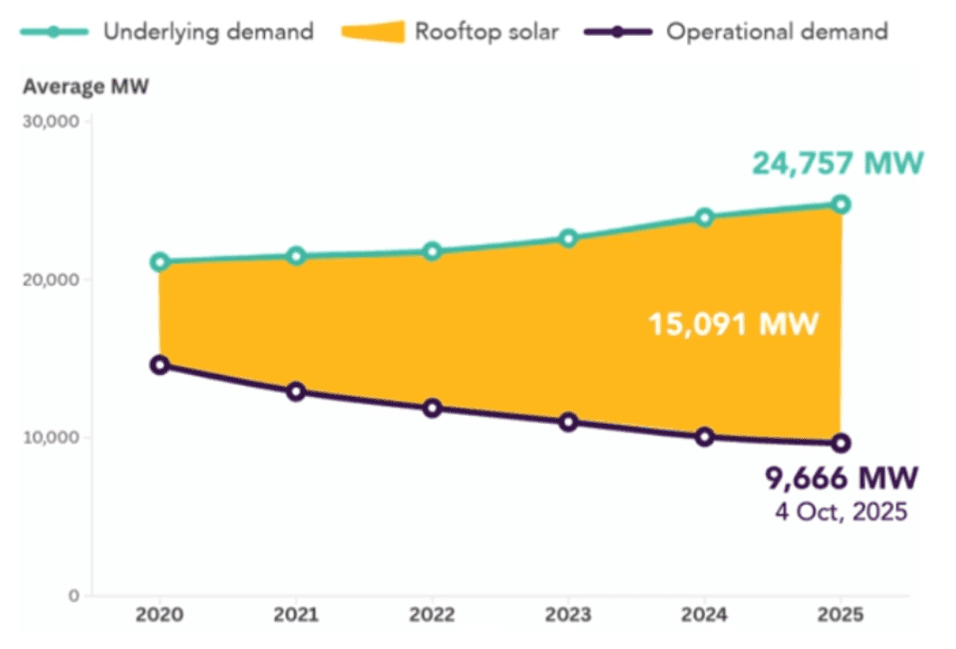
Across the Asia Pacific, solar and wind capacity is expanding rapidly, yet much of this clean power still goes unused during off-peak hours due to electricity curtailment. In Australia’s National Electricity Market, minimum operational demand fell to a record low of 9,666 MW on 4 October 2025 as rooftop PV generation surged—underscoring the growing need for storage to capture midday output and supply evening demand. India faces a similar challenge as it integrates record levels of renewable energy. In August 2025, the Ministry of New and Renewable Energy confirmed curbs on solar output during low demand periods, with industry data showing electricity curtailment in Rajasthan reaching up to 48% during peak generation hours. Producers estimate revenue losses exceeding $26 million since April 2025. The global picture points to an urgent scale-up of Long-Duration Energy Storage. The LDES Council’s latest roadmap notes that the current deployment pipeline is about 0.22 TW and that the world may need as much as 8 TWh by 2040, which implies scaling 50 times faster than today.
What is LDES?
At its simplest, long-duration energy storage means storing energy for much longer than the 2–4 hour window typical of lithium-ion systems used for daily shifting. The U.S. Department of Energy defines long duration as 10 hours or more and groups storage into four broad families: electrochemical, mechanical, thermal, and chemical5 . Examples include redox flow batteries, pumped-storage hydropower, compressed air, Iron-air batteries and molten-salt thermal systems.
The problem LDES solves
Variable renewables do not always match demand. Weather patterns can create gaps that last many hours or even several days. Research6 highlights multi-day intervals of limited wind and solar output, pointing to the need for storage solutions that can cover up to 100 hours when conditions dip. That gap between when power is made and when it is needed is the core problem that long-duration energy storage is built to solve.
The daily mismatch
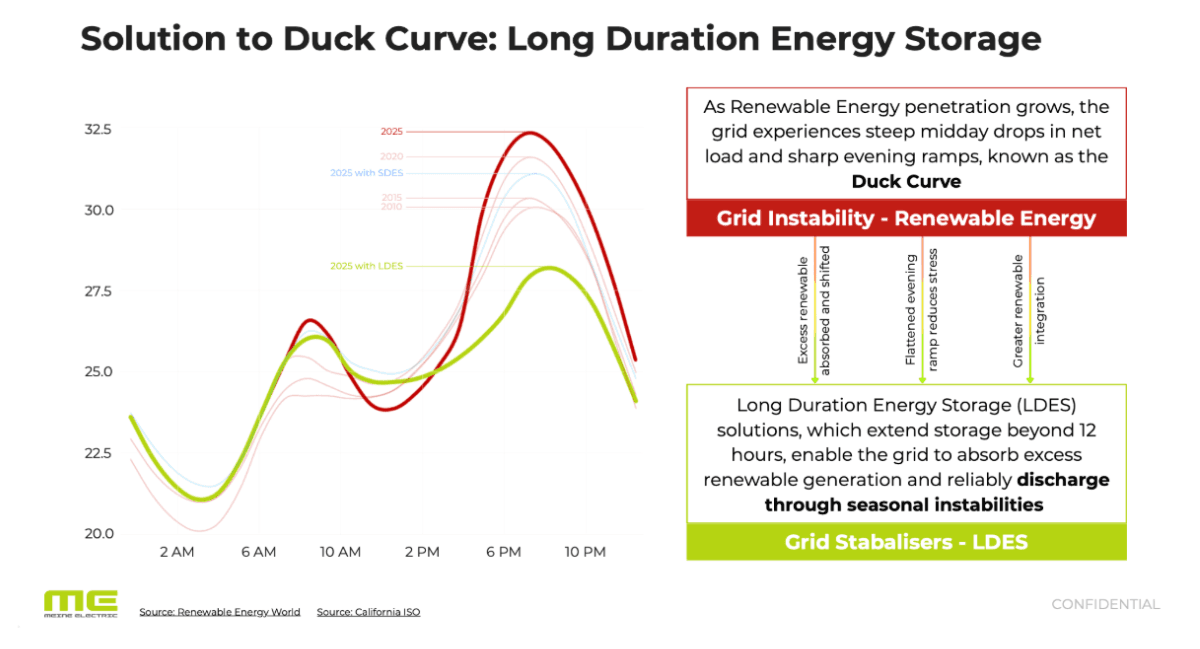
Solar peaks in the late morning and early afternoon, while demand often peaks in the evening. Without enough storage, grids spill clean electricity at midday and scramble to meet evening peaks. Storage that can hold daytime energy and release it for 10 to 24 hours directly addresses this pattern
Multi-day weather lulls
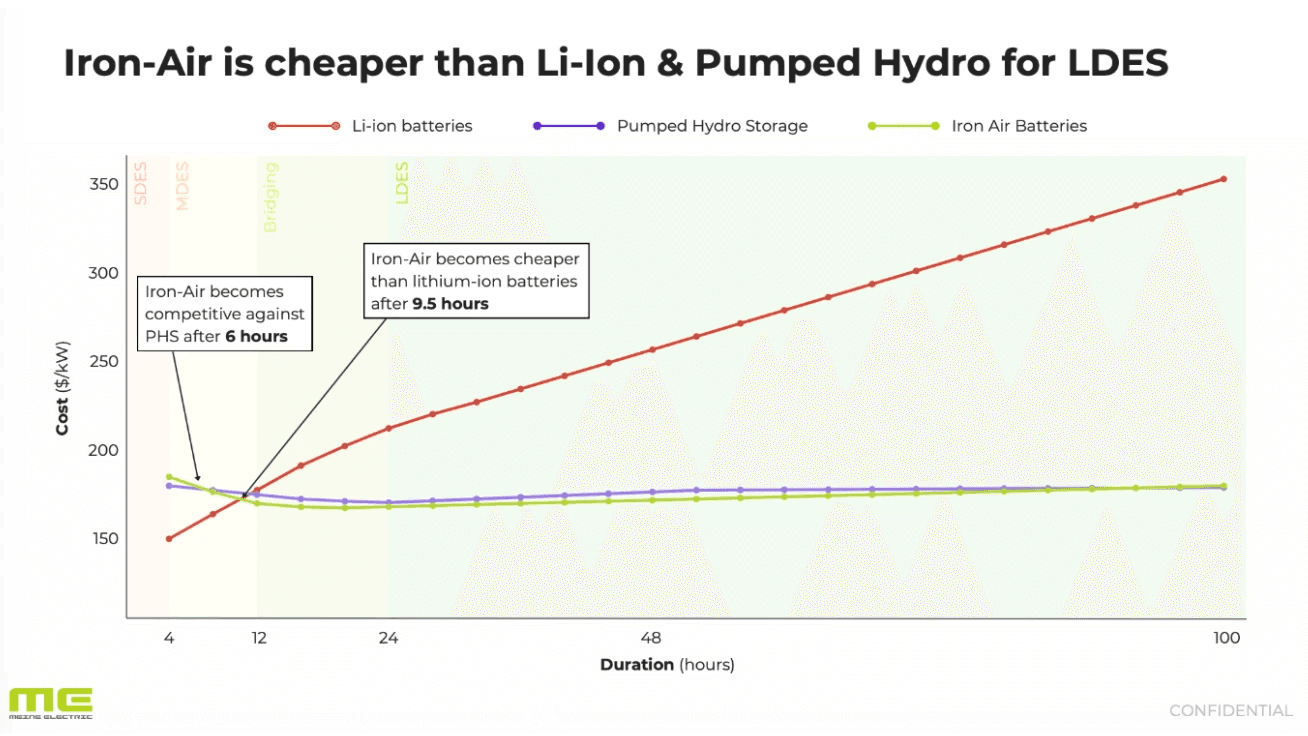
Some weeks bring little sun or wind for more than a day. Bridging those long windows is expensive with short-cycle batteries, which is why purpose-built LDES technologies are in focus for reliability at a lower cost per stored kWh.
Delivering firm, clean capacity
As renewable shares grow, planners need resources that show up on demand and for long stretches, not just quick bursts. The LDES Council frames this as a system need for firm, dispatchable clean power so that grids can stay reliable as they decarbonise. In plain terms, more long-duration energy storage technologies mean fewer outages during tough weeks and fewer fossil peakers on standby.
Unlocking congested renewables
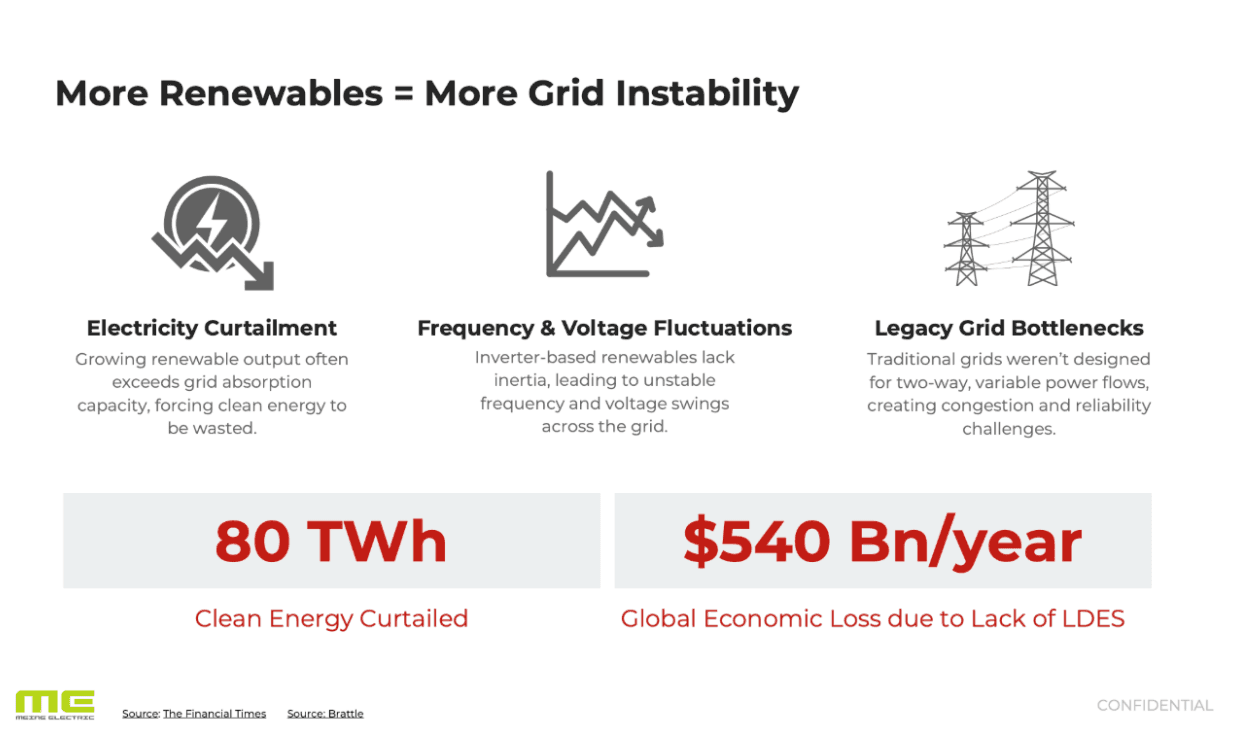
Curtailed megawatt-hours are a wasted investment. Storage placed at solar parks or grid pinch points soaks up surplus and clears the way for more renewable connections. LDES helps convert those stranded units into a reliable evening and night supply.
The LDES options available currently
There isn’t one silver bullet. A robust grid will stack different LDES technologies so each resource does the job it is best suited for.
1) Mechanical storage
Mechanical energy storage methods such as Compressed Air Energy Storage (CAES) and Pumped Storage Hydropower (PSH) are effective options for long-duration energy storage and grid flexibility7 . CAES works by compressing air and storing it underground; when needed, the pressurised air is released to power turbines and generate electricity. PSH involves pumping water between a lower and an upper reservoir; during high demand, stored water is released to drive turbines, producing electricity.
2) Thermal storage
Molten-salt systems store heat that can be converted back to electricity or used directly for industrial processes. This pathway helps shift solar energy from day to evening peaks and can reach long discharge durations with the right plant design.
3) Electrochemical storage (apart from Li-ion)
This is where most new battery technologies for long-duration applications are emerging.
Redox flow batteries: Electrolytes in external tanks store energy, so increasing duration mainly means larger tanks rather than larger stacks. That makes flow battery technology attractive for 8–12+ hour use cases at fixed sites9 .
Sodium-based, zinc-based, and other aqueous systems: These aim for lower cost and improved safety for stationary use, trading energy density for affordability and durability. (Source: energy.gov)10 .
Iron-air batteries: These “rust and unrust” iron to store and release energy and are designed for multi-day windows. They use abundant materials such as iron, water, and air, and it is the cheapest battery technology per kWh with respect to other battery tech (LCOS = 0.08$).
4) Chemical storage
Hydrogen storage involves producing hydrogen by splitting water molecules through electrolysis, a process powered by electricity. The resulting hydrogen is stored, typically as a compressed gas—either in underground reservoirs like salt caverns or in high-pressure tanks above ground. Whenever electricity is needed again, the stored hydrogen is fed into fuel cells or turbines to generate power.
Type of Storage | Pros | Cons |
|---|---|---|
Mechanical storage |
|
|
Thermal storage |
|
|
Electrochemical storage (non-Li-ion) |
|
|
Chemical storage |
|
|
How much duration do we need and why now?
A practical planning approach is to match duration to real-world grid gaps:
4–8 hours for daily solar shifting and evening peaks.
10–24 hours for enabling true round-the-clock baseload power and firm dispatchable renewable energy (FDRE), also for monsoon days and low-wind spells that last into the next day.
Up to 100 hours for extended lulls and extreme events that stress the system over several days.
Globally, the LDES Council’s 2024 snapshot argues for rapid acceleration to close the gap between what is planned today and what grids will require by 2040. There is a need for more project pipelines across a wider mix of LDES technologies to reach reliability and deep decarbonisation goals.
Why APAC needs LDES now more than ever
Japan’s curtailment has spread beyond Kyushu, with fiscal year 2023 curtailment forecast at about 1.76 TWh, and 2025 data showing curtailments up 38.2% to 1.77 TWh across nine of ten grid regions. This reflects grid bottlenecks that reject low-marginal-cost renewable power when the system hits its limits.
China’s rapid buildout has also created integration stress. In the first half of 2025, solar curtailment rose to 6.6% and wind to 5.7% year on year, with some provinces reporting much higher levels.
In Southeast Asia, countries like Vietnam and Indonesia are facing grid congestion problems from rapid renewable capacity additions. Vietnam had to halt new wind or solar project approvals in 2022 due to this. Energy storage systems, particularly battery energy storage (BESS), are seen as key solutions to reduce curtailment and stabilise grids. Projections estimate average curtailment rates could exceed 10% into the 2030s if unaddressed.
Short-term priorities
There is a need for rapid scaling of battery storage capacity to provide short-term flexibility, reduce curtailment and support the integration of growing renewable energy sources like solar and wind. A BloombergNEF report highlights that battery storage deployment in APAC needs to grow significantly, with installed capacity increasing from 36.3 GW in 2023 to 2,226.8 GW by 2050 under the Net Zero Scenario (NZS) to provide the required power system flexibility as renewable penetration increases.
In countries like Indonesia and Vietnam, current power market regulations do not allow for the participation of storage assets. There is a need to implement frameworks to enable all types of flexible assets, including batteries, to participate in power systems. This would help reduce curtailment challenges and enhance grid flexibility.
Adding to the above, the APAC region needs favourable policies to drive early adoption of different LDES technologies, such as thermal energy storage and compressed air storage, which are still nascent and costly.
A push for standalone or hybrid auctions to incentivise storage deployment. For example, India is pioneering complex renewable energy auctions that combine multiple technologies to reduce intermittency and move closer to firm, dispatchable clean power.
Why Iron-Air fits the bill
Iron-air long-duration energy storage is a strong fit for APAC because it tackles the region’s core problems:increasing reliance on Solar which is only available for limited hours during daytime, chronic curtailment, weak grid corridors, and high reliability needs at a cost point conventional batteries struggle to meet. By storing and delivering energy over 16 to as high as–100 hours, iron-air also covers inter-day gaps that 4–8-hour lithium systems weren’t designed for. Its chemistry relies on abundant, low-cost inputs, enabling local supply chains and reducing exposure to volatile imported metals.
Operationally, simpler materials and reversible rusting chemistry translate to durable, easily maintainable systems that can be scaled modularly from microgrids to utility projects. Crucially, iron-air complements rather than replaces lithium-ion—freeing Li-ion to serve fast, short-duration services while iron-air delivers affordable, dependable RTC firming that makes high-renewables grids practical in APAC.
Building APAC’s first Iron-Air LDES
MEINE Electric is building APAC’s first iron-air long-duration energy storage for its grid realities. Our systems are made from iron, water, and air, designed to complement lithium-ion by delivering longer, safer, and more affordable storage windows for utilities and industry.
Built in India and engineered for the APAC grids, MEINE’s iron-air systems operate safely in high-temperature, high-humidity environments and achieve among the lowest levelised costs of storage (~$0.03/kWh) demonstrated for multi-day energy.
If you are an IPP, EPC, or an energy-intensive C&I customer exploring long-duration energy storage technologies, we would love to collaborate on pilot deployments that prove performance on real duty cycles.
Learn more about our technology: meineelectric.com